The Complete Guide to AMSOIL Synthetic Brake Fluid
How brake fluid works in your hydraulic system
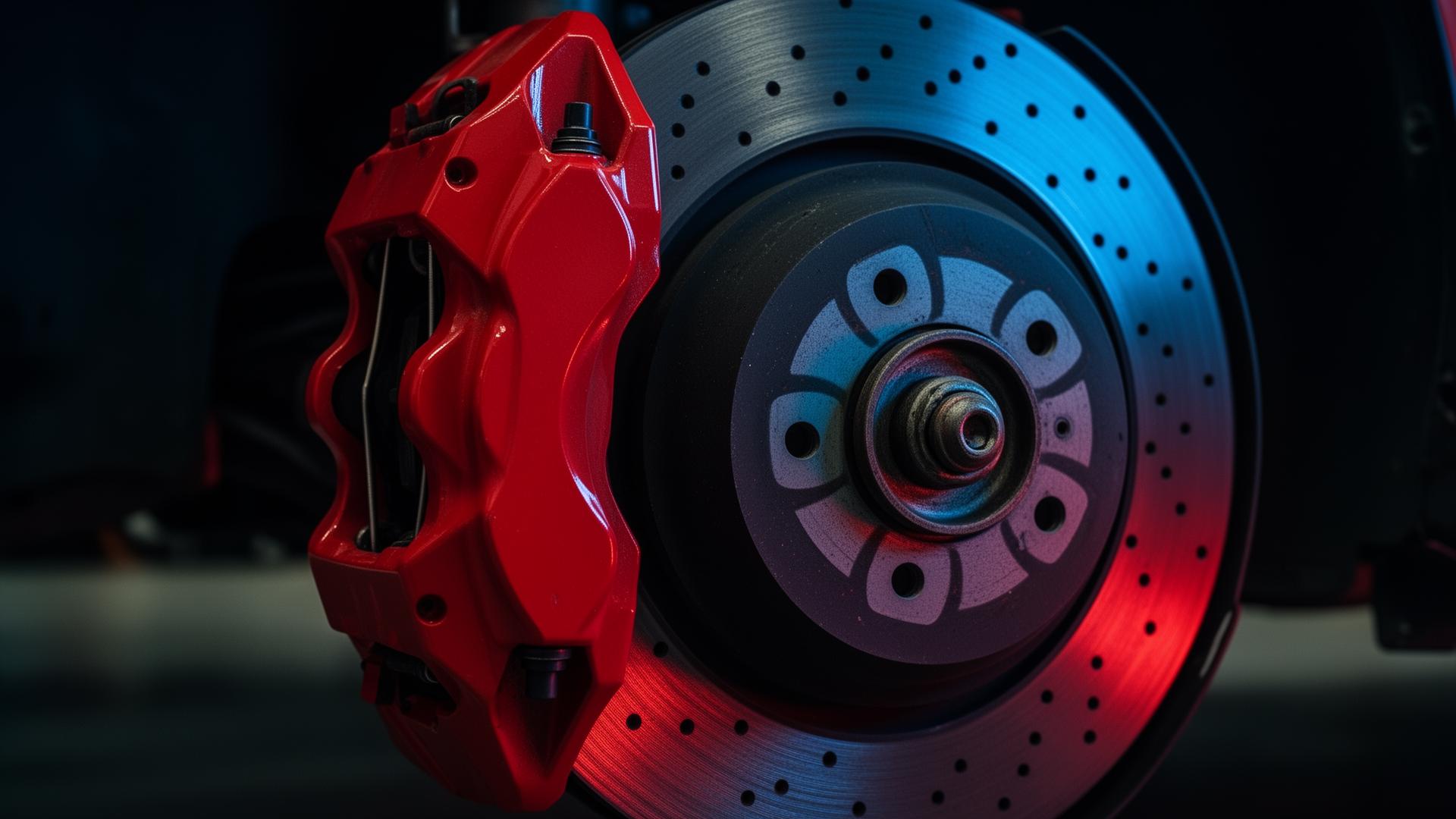
When you press the brake pedal, the master cylinder pressurizes brake fluid that travels through steel and rubber brake lines to the calipers (disc) or wheel cylinders (drum) at each wheel. Pistons inside those calipers squeeze the pads against the rotors — converting kinetic energy into heat. Brake fluid must transmit that pressure without compressing, boiling, or breaking down, all while protecting the master cylinder, ABS modulator, calipers, and steel lines from corrosion.
Why hygroscopic chemistry matters
DOT 3 and DOT 4 brake fluids are hygroscopic — they chemically attract and absorb water vapor from the atmosphere through brake hoses, the reservoir cap vent, and microscopic seal porosity. After two years in service, typical brake fluid absorbs around 3.7% water, which dramatically lowers the wet boiling point and accelerates internal corrosion. That's why every major manufacturer recommends a 2-year or 30,000-mile fluid flush, regardless of mileage.
Vapor lock — what it is and how to prevent it
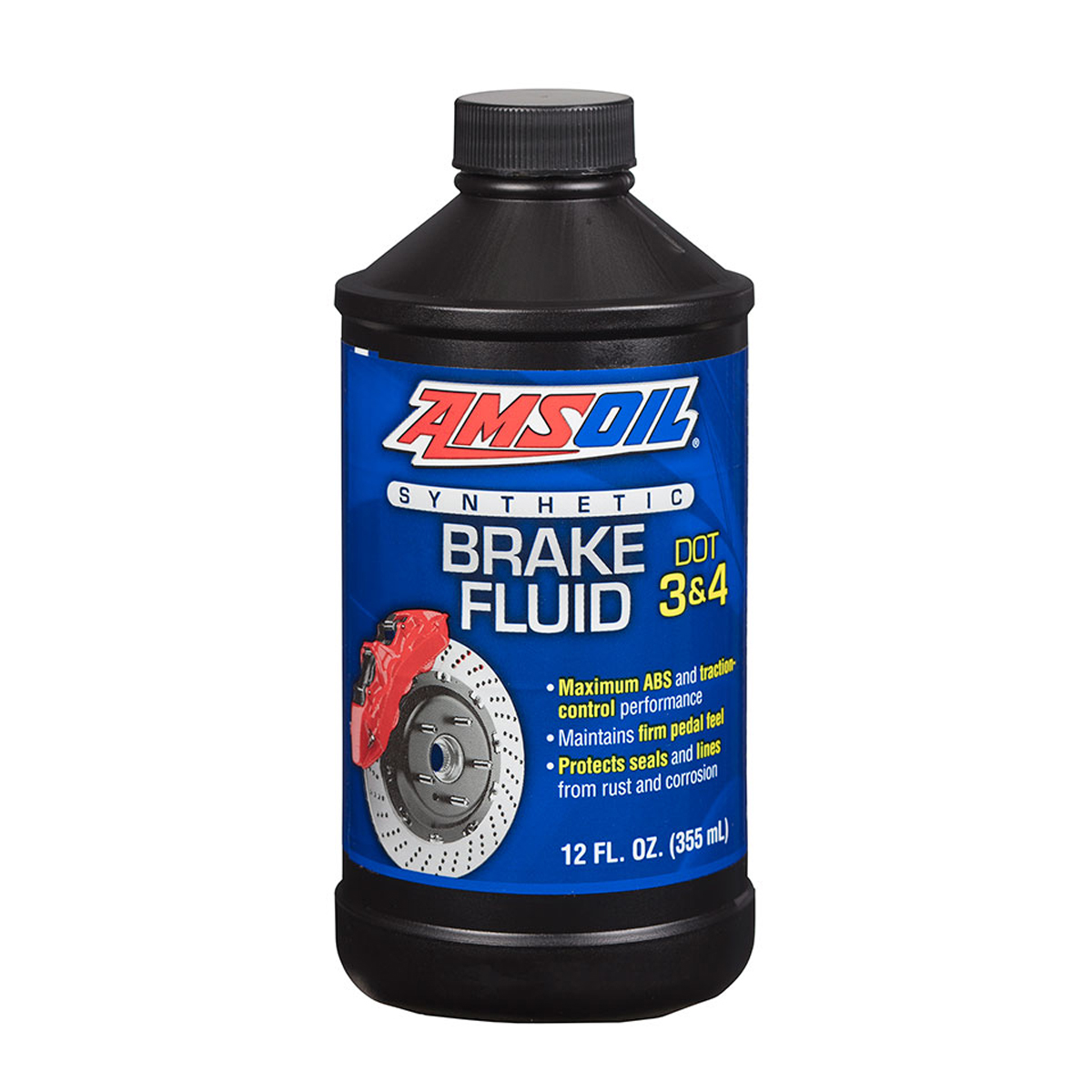
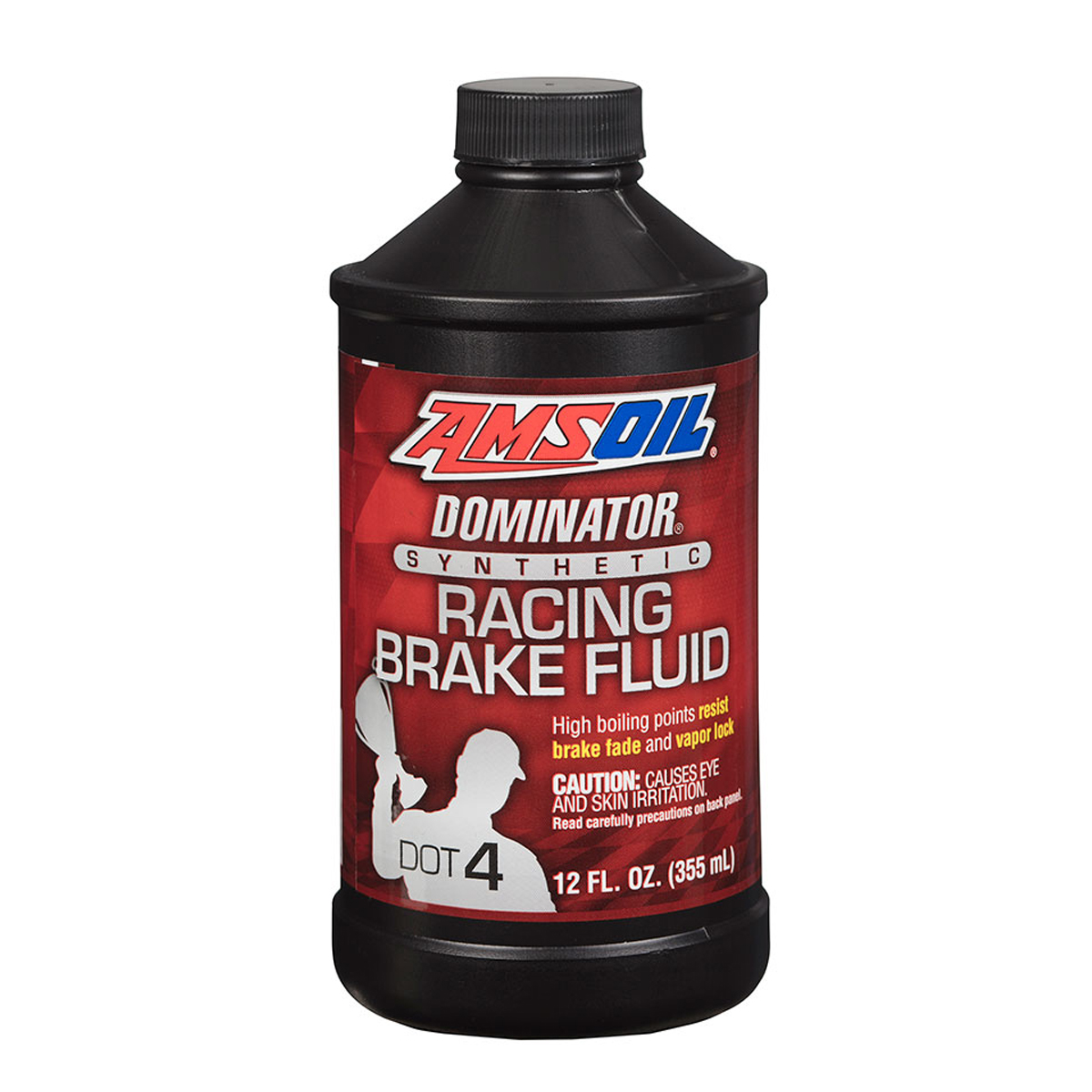
When brake fluid in the calipers exceeds its boiling point, it flashes to vapor. Vapor compresses; liquid does not. The pedal goes to the floor with no braking force — vapor lock — typically after long mountain descents, repeated track laps, or heavy towing. AMSOIL BFLV (580°F dry / 369°F wet) and BFR DOMINATOR Racing (600°F dry / 410°F wet) keep boiling points well above operating temperature so the fluid stays liquid when it matters most.
Track and performance use — why BFR exists
Performance street cars on aggressive driving roads, autocross, time-attack, and dedicated track cars hammer the brake system far harder than daily driving. Repeated 100+ mph stops cycle caliper temperatures past 500°F. AMSOIL DOMINATOR DOT 4 Racing (BFR) is engineered for that duty — the 600°F dry boiling point and 410°F wet boiling point provide the safety margin to keep the pedal firm lap after lap. Flush more frequently in track service.
ABS, traction control, and modern brake systems
Modern ABS modulators cycle brake fluid through tiny precision valves at high speed. Contaminated, oxidized, or moisture-laden fluid corrodes those valves and can disable ABS, traction control, or stability control without warning. Synthetic chemistry like AMSOIL BFLV/BFR resists oxidation and corrosion better than conventional fluid — protecting the most expensive components in the system.
DOT 3, DOT 4, DOT 5, DOT 5.1 — what's compatible
DOT 3, DOT 4, and DOT 5.1 are all glycol-ether based and chemically compatible — safe to mix in an emergency, though the resulting blend performs to the lower spec. DOT 5 is silicone-based, NOT compatible with glycol-ether fluids, and will cause brake failure if mixed. Always confirm your vehicle's required spec before topping off.